Mentoring is one of the most valuable things a senior engineer does, and one of the easiest to do badly. Too little, and junior developers stay stuck for days on problems you could explain in minutes. Too much, and you become a permanent help desk with no time left for your own work.
At Squareflo I mentored three junior frontend developers on React and our internal coding standards. This guide covers the approach that works: structured support early, then gradually stepping back.
Step 1: Start with a Clear Onboarding Path
New developers lose the most time in their first few weeks, mostly to things nobody wrote down. A short onboarding path saves both of you hours:
- Setup guide: how to run the project locally, environment variables, test commands. Ask the new developer to fix anything that's outdated; it's a great first contribution.
- Architecture overview: a one-page map of the main parts of the system and how they talk to each other.
- Team conventions: branching, commit messages, PR template, coding standards.
- A curated first task: small, real, low-risk, and touching the main parts of the stack.
Tip
Keep a running "questions new developers ask" document. Every repeated question is a gap in your docs, and the next new hire gets the answer without asking.
Step 2: Set Expectations Early
Many junior developers are afraid of asking "stupid questions" or of wasting a senior's time. Others ask before trying anything. A simple, explicit rule helps both:
Try for 30 to 60 minutes. If you're still stuck, ask, and show me what you've tried.
That small structure builds independence while making sure nobody stays stuck for a whole day. Make it clear that asking is expected, not a sign of weakness.
Step 3: Hold Regular One-on-Ones
A short, regular one-on-one (30 minutes weekly or every two weeks) is the backbone of good mentoring. Let the junior developer own the agenda, but have a simple structure to fall back on:
- What went well since last time?
- Where are you stuck or unsure?
- What do you want to learn next?
- Feedback in both directions: what's working and what isn't.
Write down what you agree on and revisit it next time. Consistency matters more than length.
Step 4: Teach Through Questions, Not Answers
When a junior developer brings you a problem, the fastest response is to give the answer. It's also the one they learn the least from. Try guiding questions instead:
- "What do you expect this function to return here? What does it actually return?"
- "Where would you look first to see where this value changes?"
- "What happens if this API call fails?"
- "Is there anything similar elsewhere in the codebase we could follow?"
This builds a debugging process they can reuse, not just a fix for one bug.
Note
Use judgment. If there's a production incident or a deadline today, just help them fix it, then talk through the reasoning afterwards.
Step 5: Pair Program Deliberately
Pairing is the fastest way to transfer the knowledge that never makes it into docs: how you navigate a codebase, read error messages, use the debugger and decide what to try next.
A few habits make pairing effective:
- Let the junior developer drive (hold the keyboard) most of the time. You navigate.
- Think out loud when you do drive, so they hear the reasoning, not just see the result.
- Keep sessions focused and time-boxed, around 60 to 90 minutes.
- Pick tasks slightly above their current level, so they stretch without getting lost.
Step 6: Use Code Review as a Teaching Tool
Code review is mentoring at scale. For junior developers, explain the why behind every important comment, link to the relevant docs or examples, and call out what they did well.
Over time, shift from pointing out every issue to asking them to review their own PR against a checklist before requesting your review. Eventually, have them review your pull requests too. Reading senior code critically is one of the fastest ways to level up.
Step 7: Gradually Increase Ownership
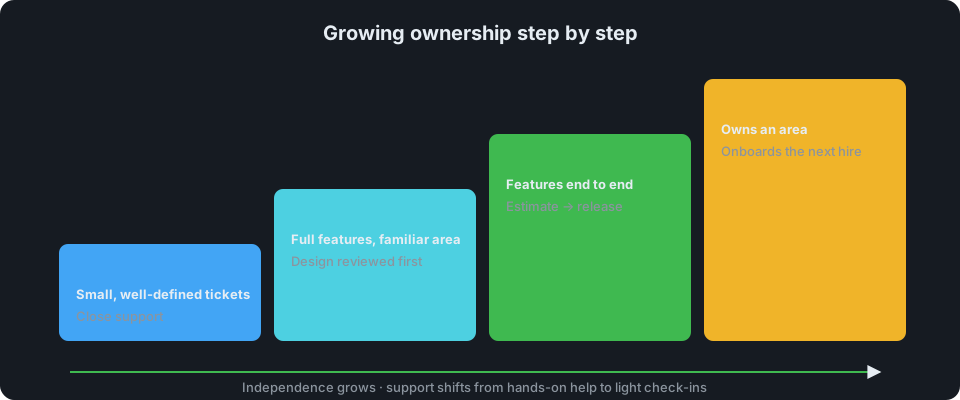
The goal of mentoring is independence. Increase responsibility step by step:
| Stage | What they own |
|---|---|
| Weeks 1–4 | Small, well-defined tickets with close support |
| Months 2–3 | Full features in a familiar area, with design reviewed before coding |
| Months 3–6 | A feature end to end: estimation, design, implementation, release |
| Beyond | A component or service area, plus helping onboard the next new developer |
The timeline will vary by person; adjust it to their progress, not to the calendar.
Warning
Don't confuse independence with isolation. Even when someone owns a feature, keep a lightweight check-in so problems surface early rather than the day before a deadline.
Step 8: Protect Your Own Time
Mentoring shouldn't mean being interrupted all day. A few boundaries keep it sustainable:
- Office hours: a fixed daily slot when anyone can drop in with questions.
- Batch async questions in a team channel rather than private messages, so answers help everyone.
- Write it down once: if you explain something twice, turn it into a doc.
- Share the load: pair junior developers with each other and with mid-level engineers, not only with you.
Summary
Great mentoring isn't about having every answer. It's about creating a path where junior developers can learn quickly, ask for help without fear and steadily take on more ownership. Start with solid onboarding and clear expectations, use one-on-ones, questions, pairing and code review to teach, and step back as they grow. You'll get a stronger team, and more time for your own work in the long run.